

Entry price
The reference point for the trade. Long: profit when price is above entry. Short: profit when price is below it. Additional fills move the average.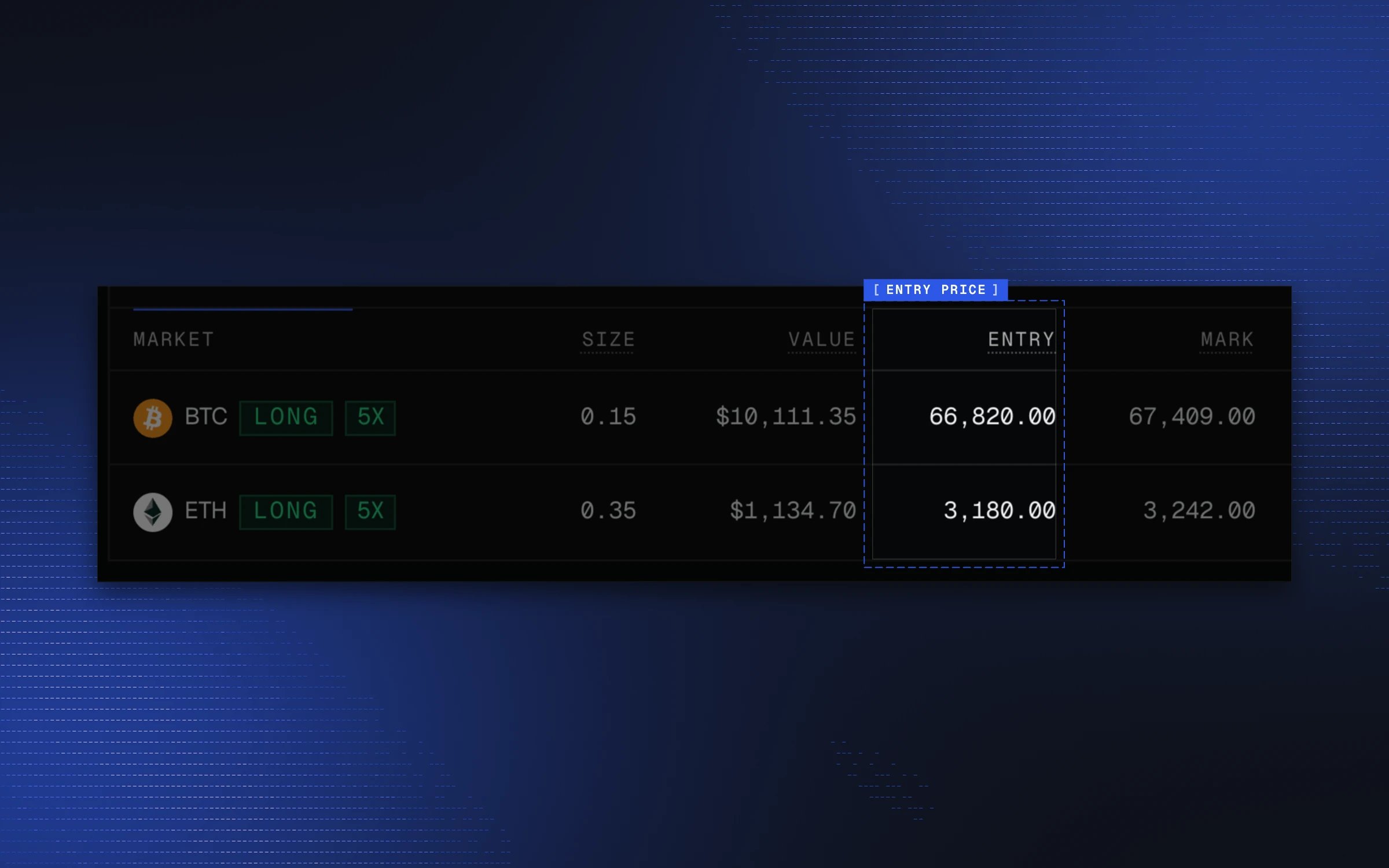
Understanding P&L
Unrealized P&L is what the open position would make or lose at the current mark; it counts toward equity, and so toward both loss limits. Realized P&L has already settled to your balance. Size scales both: the same move is twice the P&L at twice the size.Unrealized P&L (long) = (mark − entry) × size
Fees in your P&L
Every position pays two trading fees, both taken from your balance on the fill. They reduce equity, so they count toward the loss limits.
Note that holding a position also costs a funding fee: an hourly payment between longs and shorts. Whether you pay or receive it depends on the market and on whether you’re long or short. The current rate is in the Markets table. Rates and worked examples: Fees.
uP&L and rP&L
The Positions table shows both for every open position.- uP&L is the price move only:
(mark − entry) × size. It does not include fees. - rP&L is realized from the first fill. The opening fee goes into it when the position opens, and funding as each hour settles. Closing part of the position adds that size’s gross P&L and its closing fee. Hover it to see each part.
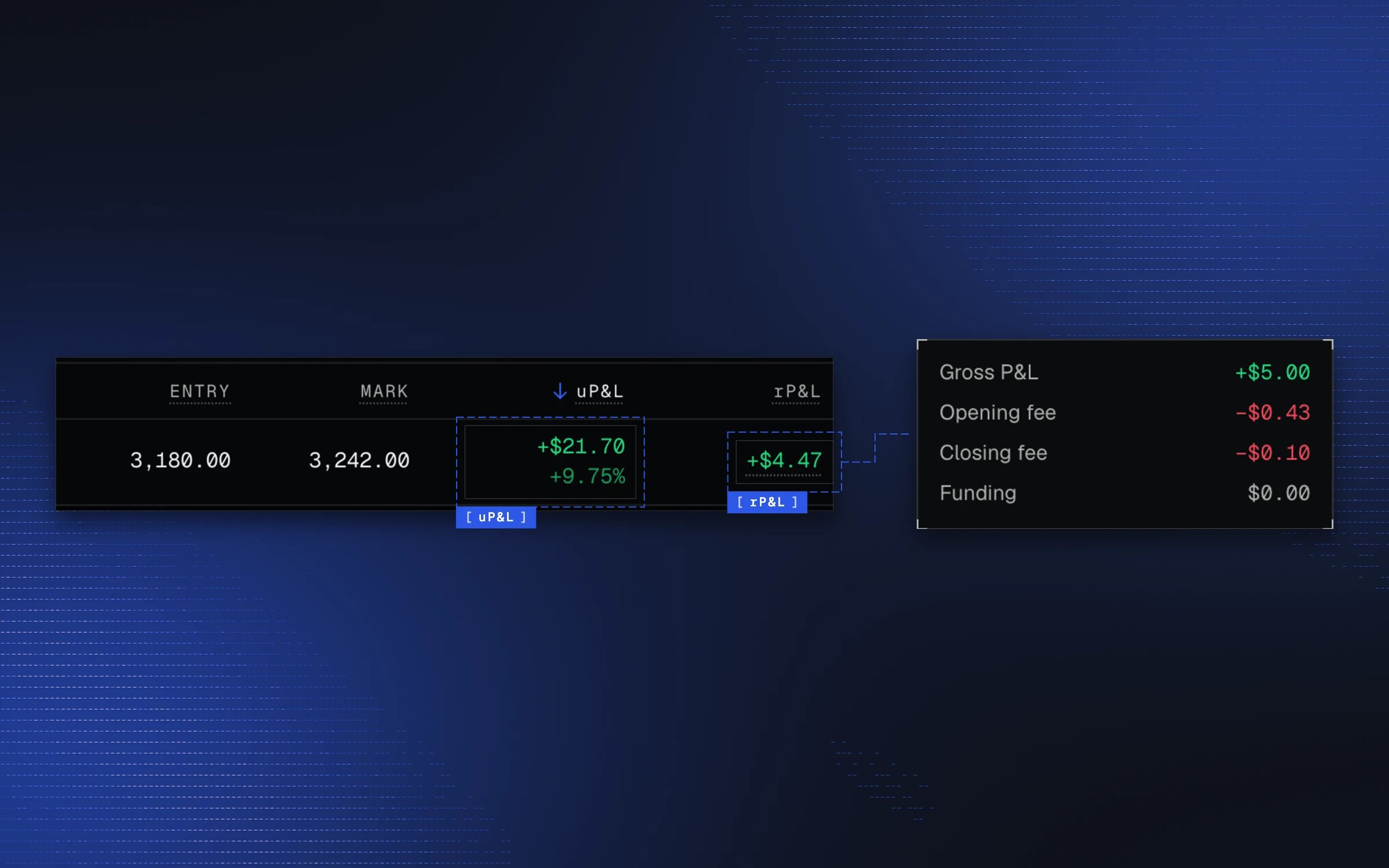
Example
Before you close
The Close position dialog shows what the close will add before you confirm. Realized P&L at the top already holds the opening fee and any funding settled so far. Below it are the unrealized P&L on the size you are closing and the closing fee for that size. Expected net P&L is all three together.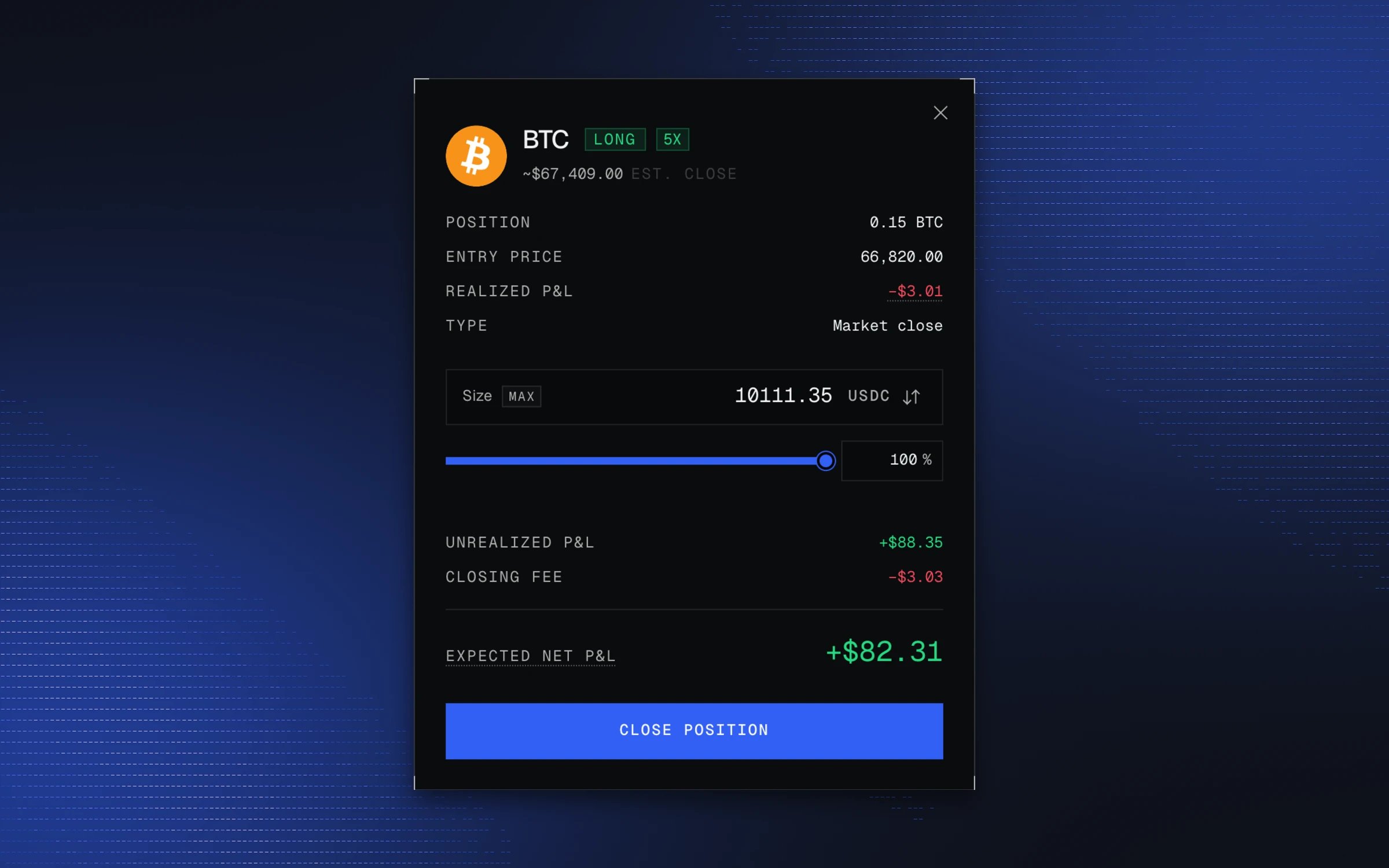
Example